How to make a portfolio with no experience (a guide for fresh grads)
· Guide · 4 min read
How to build your first portfolio as a fresh graduate with no experience: what counts as portfolio work, how to structure it, and how to stand out.
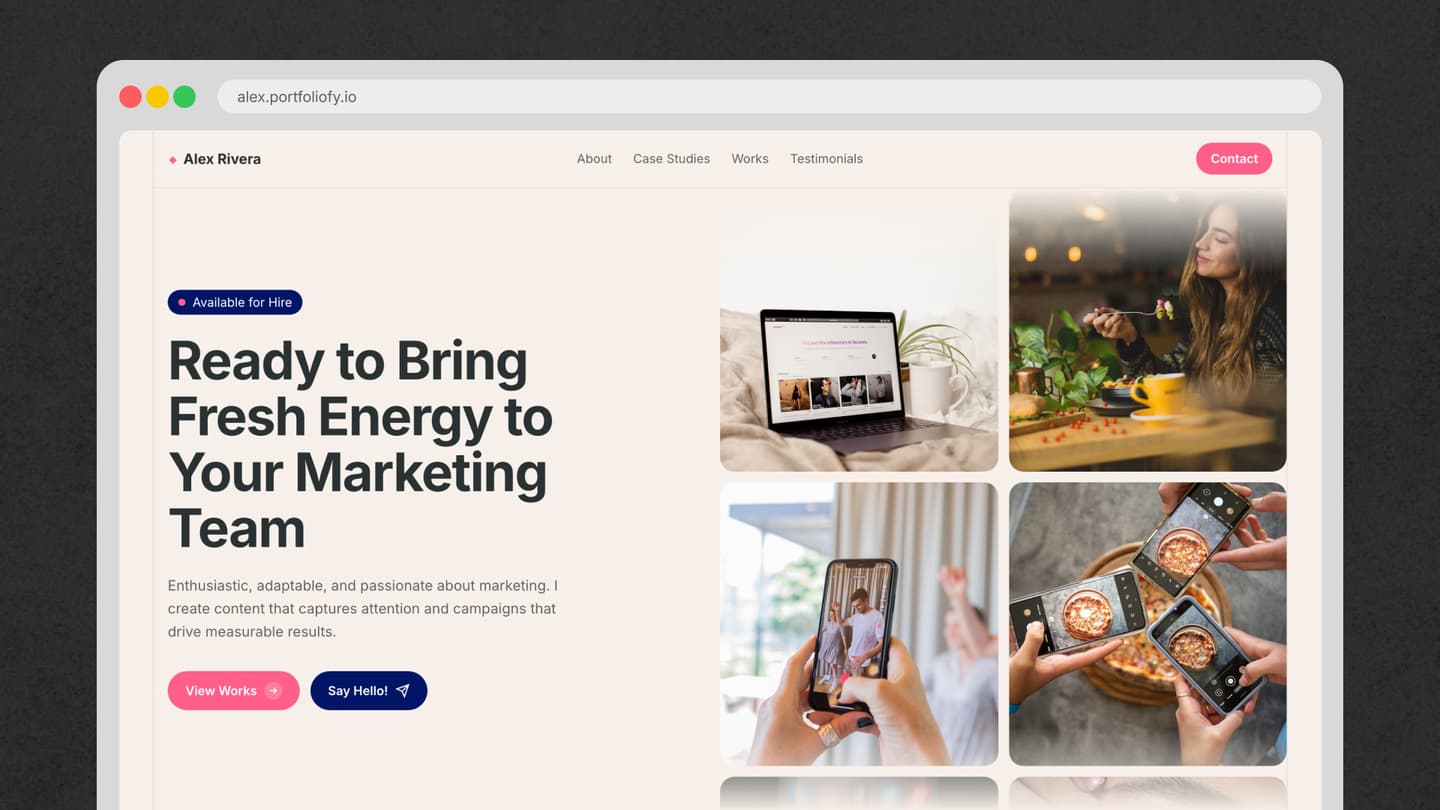
If you have just graduated, the advice to "show a portfolio" can feel like a trap. Portfolios are supposed to show professional work, and professional work is the thing you do not have yet. So the page stays empty and you feel behind before you have started. The good news is that a first portfolio is not about years of experience. It is about showing that you can do the work, and you almost certainly have more to show than you think.
You do not need experience, you need proof you can do the work
Whoever is looking at your portfolio is not counting your years. They are trying to answer one question: can this person do the thing we need? Anything that answers that question honestly belongs in your portfolio, whether or not someone paid you for it. Shift your goal from "prove I have a track record" to "show I can do good work," and the blank page fills up quickly.
What counts as portfolio work when you are starting out
More than you would expect. As a fresh graduate, your material usually comes from a few places:
Coursework and capstone projects. The stronger assignments from your degree are real work. A final project, a research piece, a design brief, a build. Present the best ones properly and they carry weight.
Personal projects. Anything you made because you wanted to. A site you designed, an app you coded, a brand you invented, a series you shot, a campaign you wrote for a product you like. Self-initiated work often says more about you than assigned work does, because you chose it.
Spec work. Work you make specifically for your portfolio, aimed at a company or a type of client you want to work with. A brand you admire did not hire you, but a sample campaign for them shows exactly what you can do. Just be clear that it is a concept.
Freelance, volunteer, and internship work. A logo for a friend's business, content for a club, a project from an internship, anything you did for a real person or organization at any scale. Small and real still counts.
You do not need all of these. Two or three strong pieces beats a long list of weak ones.
How to structure your first portfolio
Keep it simple and lead with the work. A clear structure for a first portfolio looks like this: a short intro that says who you are and what you want to do, then your best projects, then a way to reach you. That is enough to start.
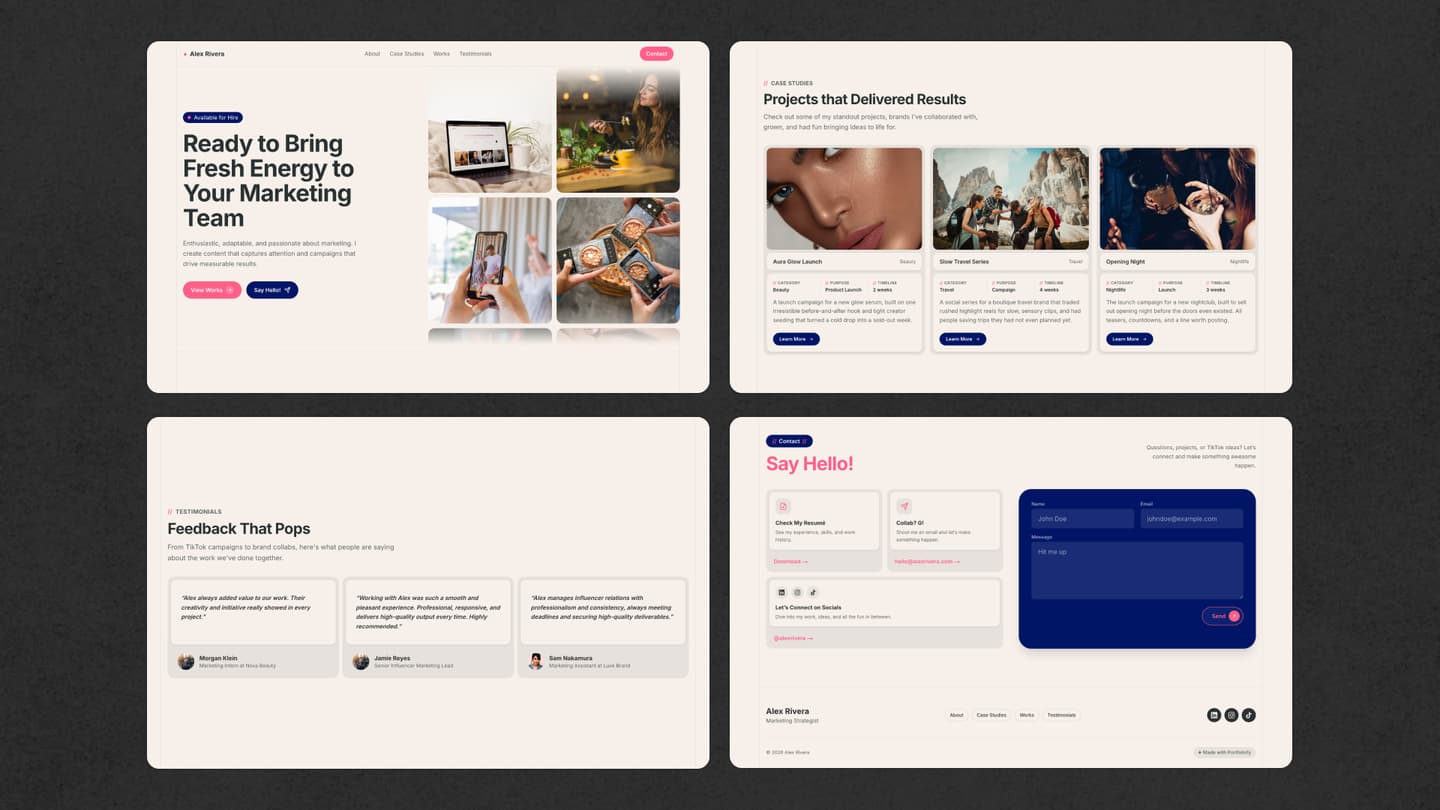
Your intro should be two or three lines, not a life story. Say what field you are aiming for and what you bring to it. Skip anything that starts with "passionate about," because it says nothing that the work will not say better.
Write about each project the right way
The mistake most first portfolios make is showing a project with no explanation. A screenshot or an image, and nothing else. Give each project a short write-up instead: what it was, what your role was, and the outcome or what you learned. You do not need a big result. For a student project, "what I learned" or "the problem I was solving" is a perfectly honest outcome. The goal is to show your thinking, not just the final image.
Two or three strong pieces beats a long list of weak ones.
Make it look like it is for your field
A generic layout that could belong to anyone works against you. If you are aiming for a specific field, the sections and the order should reflect that field, so the person reading it immediately sees that you understand what matters in it. A design portfolio, a marketing portfolio, and a developer portfolio should not look identical.
Social proof when you are new
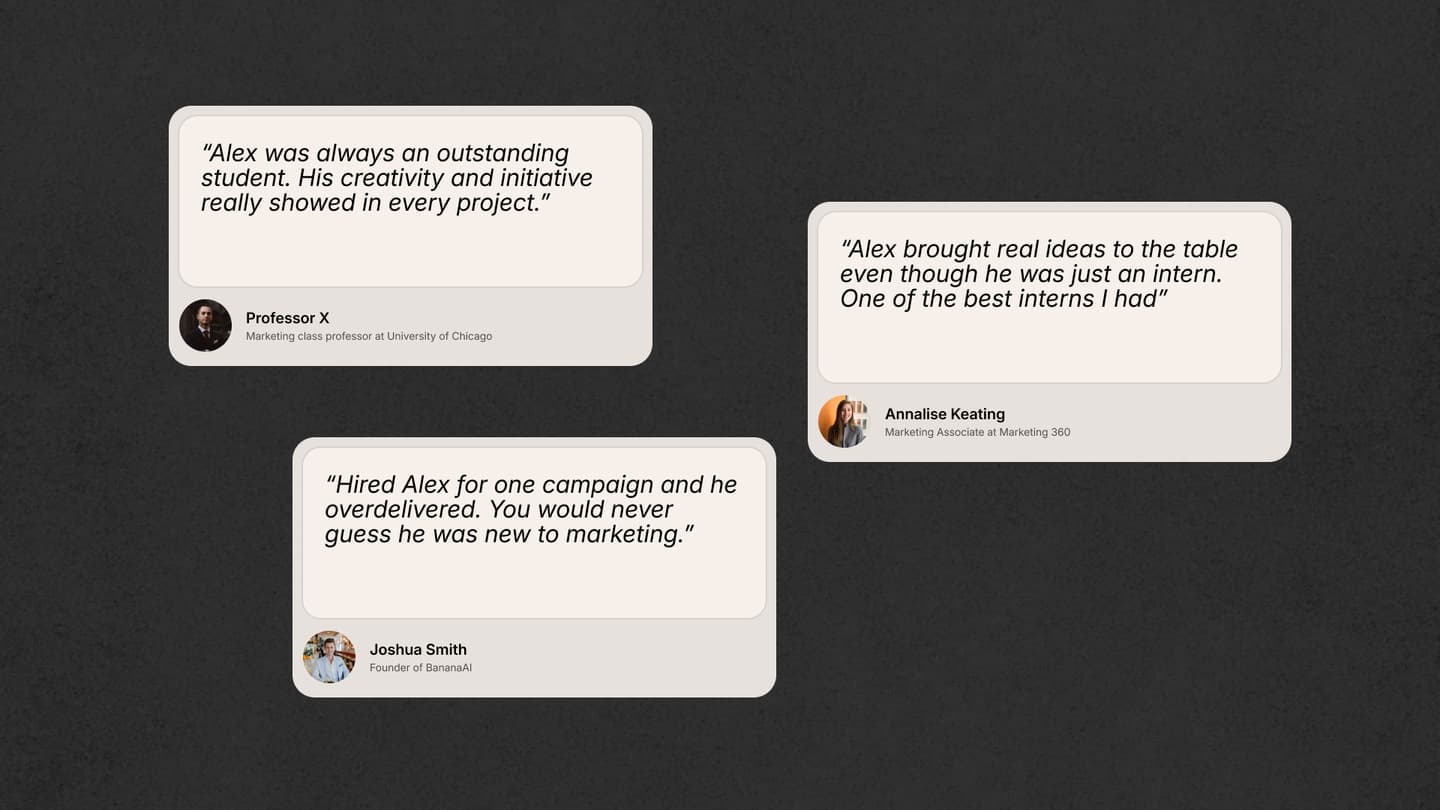
You will not have brand logos yet, and that is fine. A single honest line from someone who has seen your work does a lot. Ask a professor, a classmate you worked with, an internship supervisor, or your first small client for a sentence about working with you. One real quote is worth more than an empty section, and it is easier to get than you think.
Two things that quietly matter
Make sure it reads well on a phone, because that is where a lot of people will open it. And make it easy to update, because your first portfolio should change often as you make new work and land your first roles.
If the blank page is what is stopping you
Knowing what to include is one thing. Writing the copy and building the layout is where most people stall, especially on a first portfolio when you are not sure how to talk about your own work. If that is the part stopping you, that is the gap Portfoliofy fills. You answer a few questions about your projects and what you are aiming for, and it gives you a portfolio structured for your field, with the sections already in place. You add your own work and images and publish it on your own link. It reads right on a phone, and you can keep updating it as you grow. You can try it free for 14 days, no card needed.
You are not behind because you are just starting. Everyone's first portfolio started with no experience. You just need your best projects in the right order, on a link you can send the next time someone asks. For more on writing up work that has no big numbers behind it yet, see our guide on portfolio mistakes that get you ignored, and browse the templates to see how a first portfolio comes together.