Portfolio mistakes that get you ignored (and how to fix them)
· Guide · 5 min read
The most common portfolio mistakes that quietly cost you replies, and how to fix each. If your work is good but nobody responds, the problem is usually here.

You send your portfolio out and hear nothing back. It is easy to read that silence as a verdict on your work, but most of the time the work is fine. The portfolio around it is what is getting in the way. Whoever is deciding, a recruiter, a client, or a brand, gives it a few seconds on a phone, and small mistakes are enough to make strong work look weaker than it is. Here are the ones that quietly cost people replies, and how to fix each.
Leading with your life story instead of your work
The most common mistake is opening with a long personal introduction. Several paragraphs about your passion, your journey, and how you have always loved what you do. The reader almost never finishes it, and by the time they reach anything concrete they have already lost interest.
Showing everything instead of your best
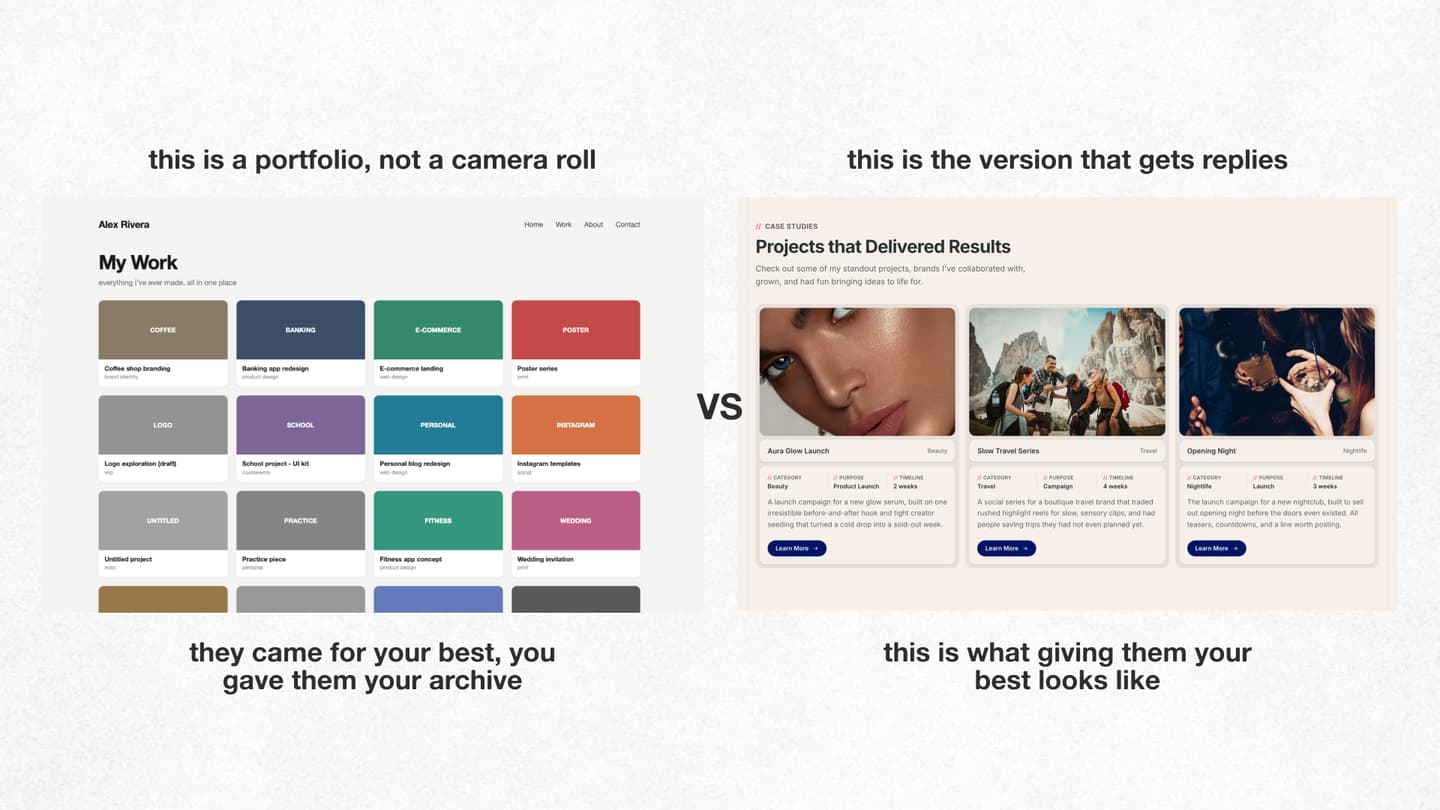
When you are proud of your work it is tempting to include all of it. Every project, every draft, every practice piece, all on one page. The problem is that a page full of everything buries the few pieces that would actually win the reader over. Your strongest work ends up sitting next to filler, and the average drags the whole impression down.
Showing work with no result or context
A wall of nice-looking projects with no explanation is a missed opportunity. The reader sees that you made something, but not what it was for, what your role was, or what happened because of it. Good work without context reads as decoration.
People are there to judge the work, so give them the work first.
A portfolio that falls apart on a phone
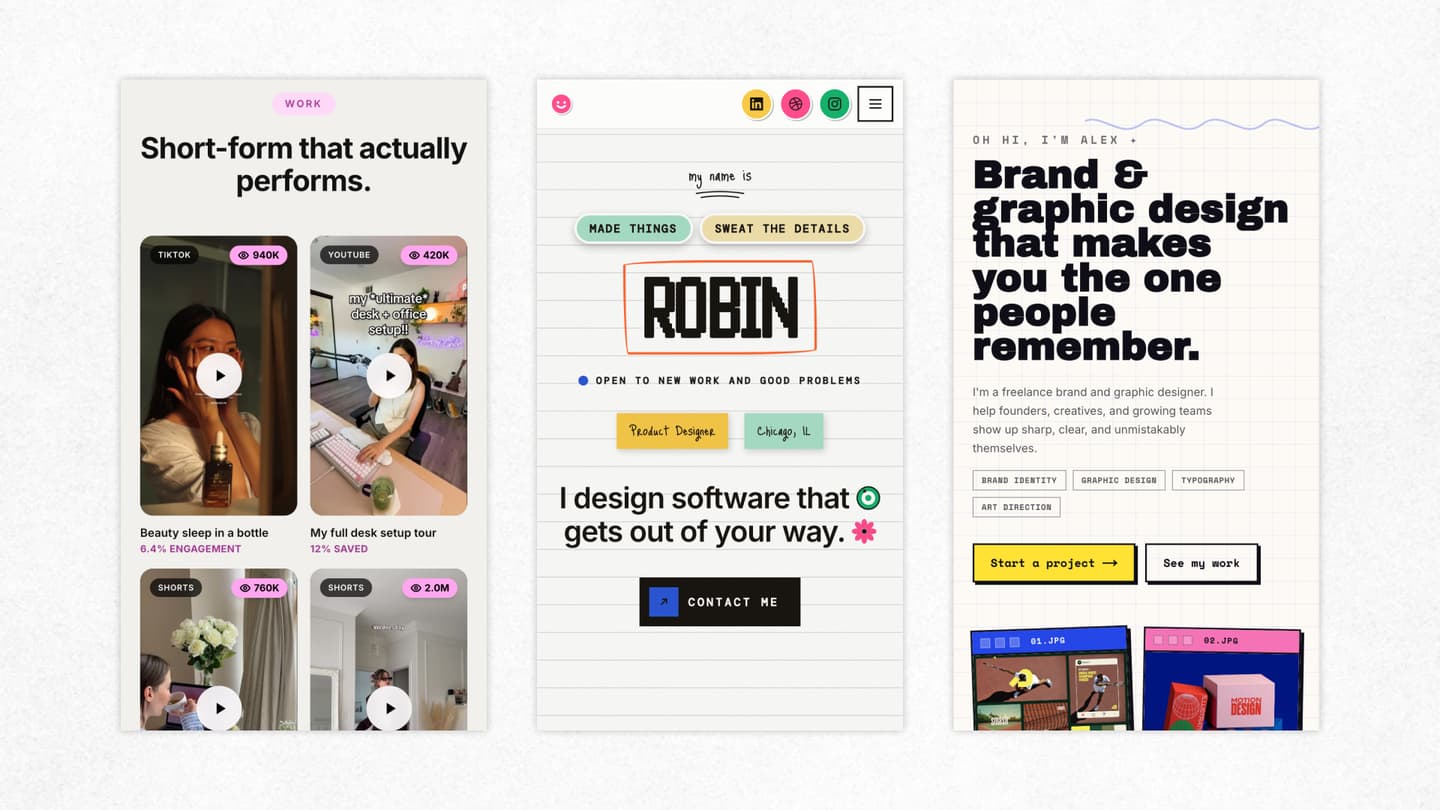
Most people will open your portfolio on their phone, often it is the first and only place they see it. If the layout was built for a desktop and never checked on mobile, it breaks: text overflows, images get cut off, and the reader has to pinch and zoom to make sense of it. Almost nobody does. They leave.
No social proof
A portfolio that only contains your own claims asks the reader to take your word for everything. Adding evidence that other people have trusted you does a lot of the convincing for you: brand names or logos you have worked with, a count of clients or projects, or a short testimonial in someone else's words.
No clear way to get in touch
The last mistake is making the reader work to contact you. If someone reaches the end of your portfolio ready to reach out and cannot immediately find how, that moment of intent passes. Do not scatter your contact details or hide them behind a menu.
When the real problem is building it
Most people know roughly what to show. The part that stops them is writing the copy and building the layout so it reads well and works on a phone. If that is what has you stuck, that is the gap Portfoliofy fills. You answer a few questions about your work, and it gives you a portfolio structured for your field, with the sections that matter already in place. You add your own work, your results, and your images, and publish it on your own link. It reads right on a phone and you can update it later without rebuilding it. You can try it free for 14 days, no card needed.
Your work is probably better than your reply rate suggests. Fix even one of these and it starts landing the way it should. For more on building one from scratch, see our guide on making a portfolio in Canva without it getting ignored, and browse the templates to see how the sections come together.